Original: $2.91
-70%$2.91
$0.87The Story
Wild Chicory Seeds
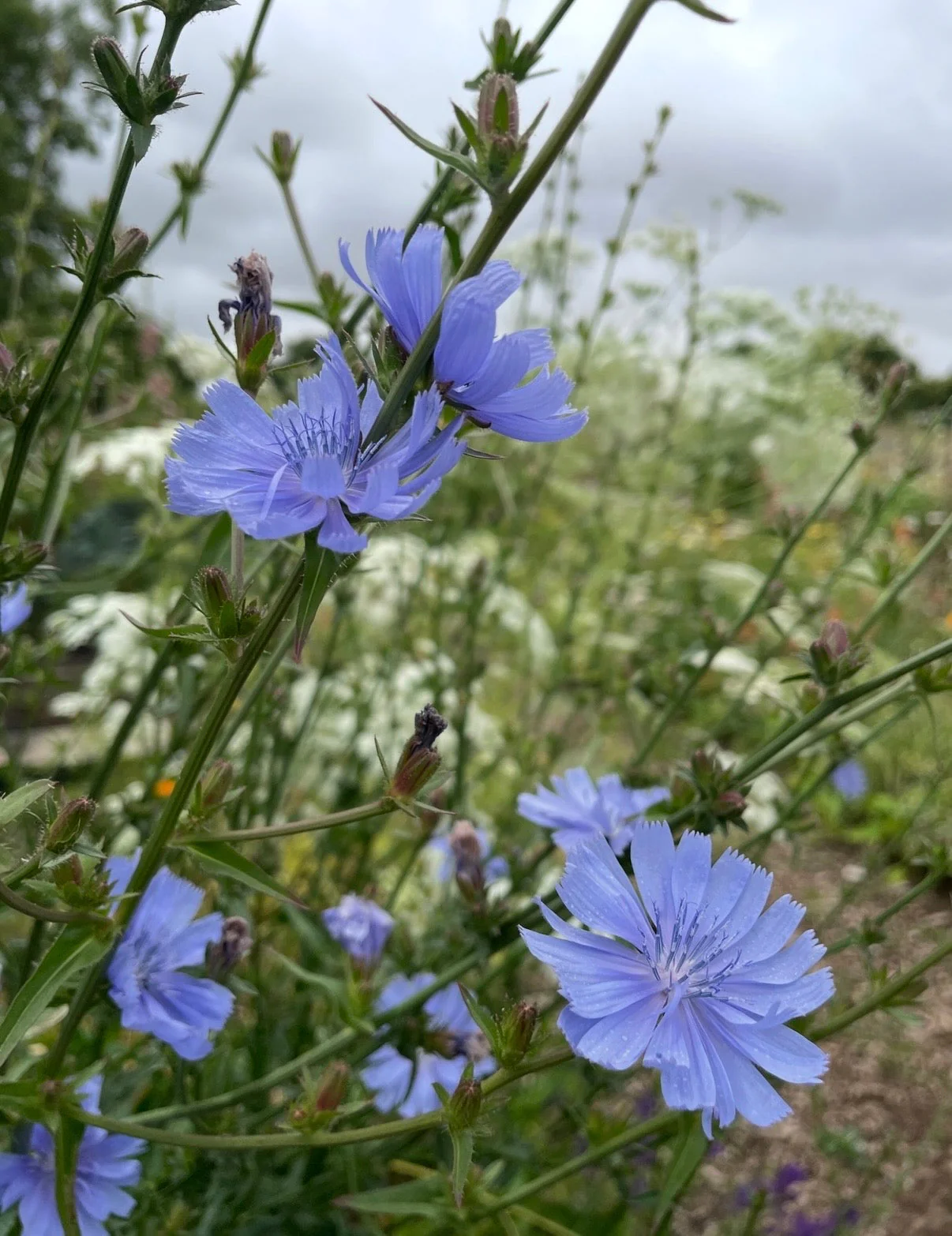
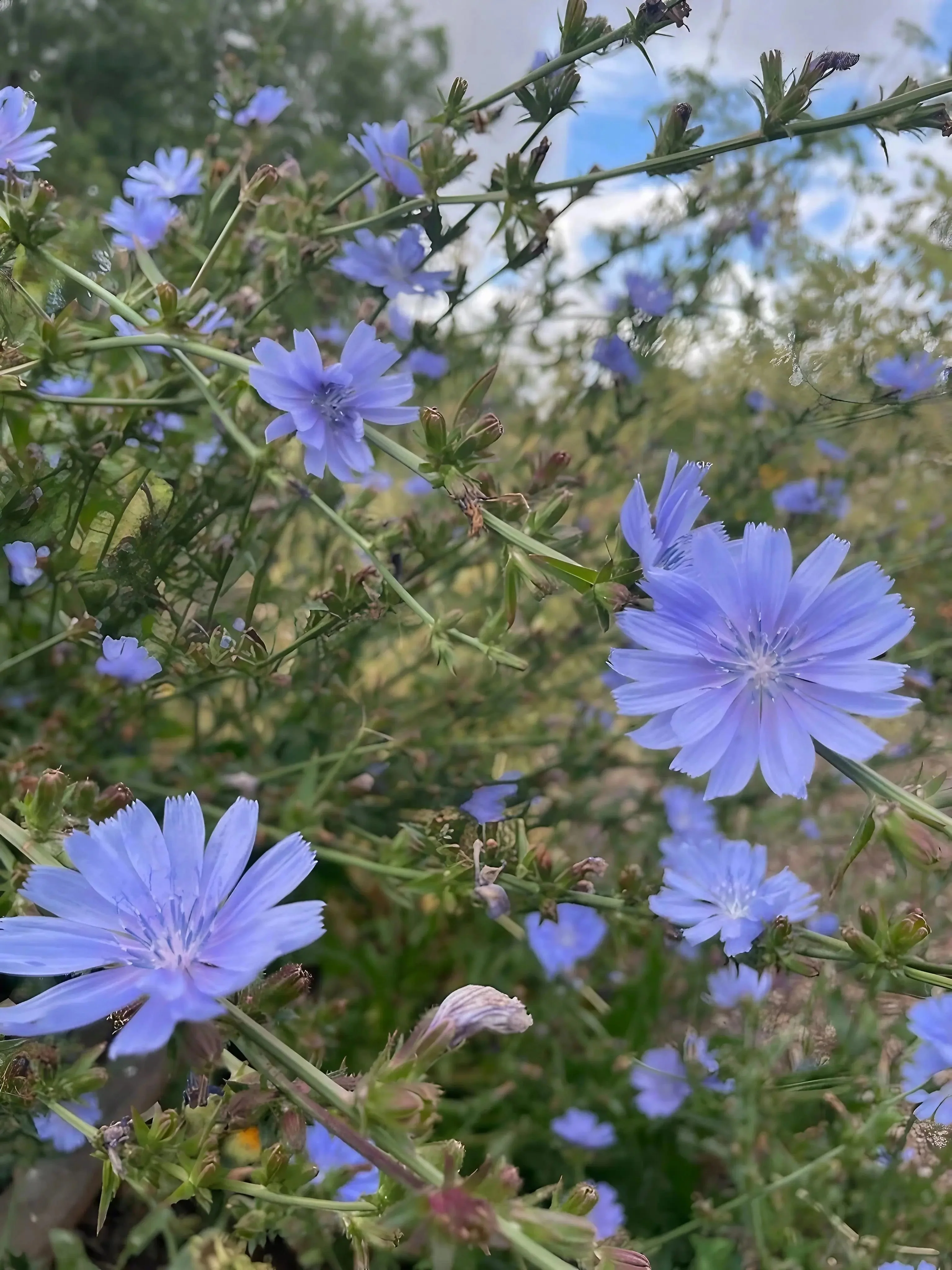
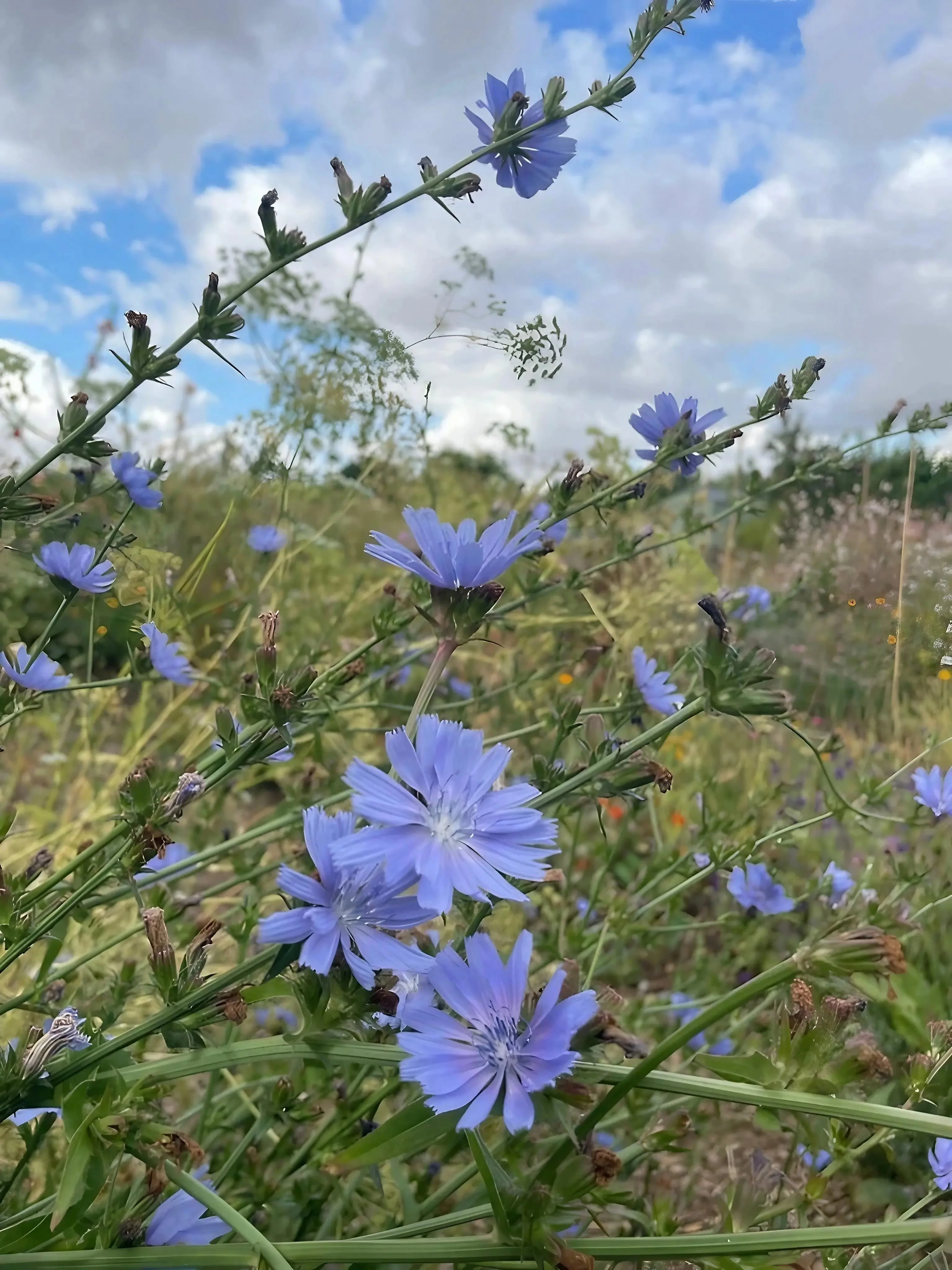
If you have ever driven past a roadside verge in July and spotted tall, wiry stems topped with star-like flowers in a shocking shade of azure blue, you have met Wild Chicory. It is a stunning native perennial that thrives where other plants fail.
This is a plant of character. Its tough, zigzagging stems can reach over a metre high, creating an airy, see-through effect in a border or meadow. It is incredibly drought-tolerant thanks to a deep taproot, making it the perfect choice for dry gardens, gravel patches, or "rewilding" projects that need a splash of vivid colour.
Read More
🌿 Understanding the Plant
Wild Chicory is a Hardy Perennial.
It forms a low rosette of dandelion-like leaves in spring, then sends up tall flower spikes in summer. It comes back year after year.
The "Watcher of the Road": Chicory flowers have a fascinating rhythm. They open wide in the morning to greet the sun but usually close up by the late afternoon or in dull weather. It’s a flower that keeps time!
🌱 Growing Guide: How to Sow and Grow
This plant has a massive taproot (like a parsnip), so it hates being moved. Direct sowing is best.
Germination:
Sow directly outdoors from March to May, or in Autumn (Sept). Scatter seeds onto raked soil and cover lightly (5mm deep). Germination takes 14-21 days.
Where to Sow:
It demands **full sun** and alkaline/chalky soil, though it tolerates almost anything except waterlogged bog. It loves heat and dry conditions.
Care While Growing:
It is virtually maintenance-free. You don't need to water it once established. You can cut the stems back to the ground in autumn to tidy it up.
📋 Plant Specifications
| Latin Name | Cichorium intybus |
| Common Name | Wild Chicory / Blue Sailors |
| Hardiness | H7 (Very Hardy - to -20°C) |
| Light Required | Full Sun ☀️ |
| Height | ↕️ 90cm - 120cm (Tall & Airy) |
| Spread | ↔️ 40cm |
| Spacing | 🌱 30cm apart |
| Great for | 🐝 Pollinators 🌾 Chalk/Limestone Soil 🏜️ Dry Gardens 🥗 Edible Roots/Leaves |
| Seed Count | Approx. 300 seeds per packet |
🤝 Perfect Garden Companions
Chicory looks best in a relaxed, meadow-style planting scheme:
- 🥕 Wild Carrot (Daucus carota): The Roadside Duo. You often see these two growing together in the wild. The flat white umbels of the Wild Carrot provide a horizontal contrast to the tall, vertical blue spikes of Chicory.
- 🌼 Oxeye Daisies: The Meadow Mix. The simple white and yellow of the daisy makes the electric blue of the Chicory pop. Both are tough perennials that thrive in the same conditions.
📅 Sowing & Flowering Calendar
Sow outdoors in spring. Flowers July to September.
| Month | J | F | M | A | M | J | J | A | S | O | N | D |
|---|---|---|---|---|---|---|---|---|---|---|---|---|
| Sow Outdoors | 🟢 | 🟢 | 🟢 | 🟢 | 🟢 | |||||||
| Flowers | 🌸 | 🌸 | 🌸 |
⚠️ Edible & Useful
The young leaves can be eaten raw in salads (they are the ancestor of Radicchio), but they are bitter! The roots can be roasted and ground to make a caffeine-free coffee substitute.
🏆 Officially Recognised Excellence
This is a top-tier plant for biodiversity. Cichorium intybus is listed on the RHS Plants for Pollinators list, producing easily accessible nectar for bees.

Details & Craftsmanship
Every detail has been carefully considered to bring you the perfect product.
Details & Craftsmanship
Every detail has been carefully considered to bring you the perfect product.

Details & Craftsmanship
Every detail has been carefully considered to bring you the perfect product.
Details & Craftsmanship
Every detail has been carefully considered to bring you the perfect product.

Details & Craftsmanship
Every detail has been carefully considered to bring you the perfect product.
Description
Wild Chicory Seeds
If you have ever driven past a roadside verge in July and spotted tall, wiry stems topped with star-like flowers in a shocking shade of azure blue, you have met Wild Chicory. It is a stunning native perennial that thrives where other plants fail.
This is a plant of character. Its tough, zigzagging stems can reach over a metre high, creating an airy, see-through effect in a border or meadow. It is incredibly drought-tolerant thanks to a deep taproot, making it the perfect choice for dry gardens, gravel patches, or "rewilding" projects that need a splash of vivid colour.
Read More
🌿 Understanding the Plant
Wild Chicory is a Hardy Perennial.
It forms a low rosette of dandelion-like leaves in spring, then sends up tall flower spikes in summer. It comes back year after year.
The "Watcher of the Road": Chicory flowers have a fascinating rhythm. They open wide in the morning to greet the sun but usually close up by the late afternoon or in dull weather. It’s a flower that keeps time!
🌱 Growing Guide: How to Sow and Grow
This plant has a massive taproot (like a parsnip), so it hates being moved. Direct sowing is best.
Germination:
Sow directly outdoors from March to May, or in Autumn (Sept). Scatter seeds onto raked soil and cover lightly (5mm deep). Germination takes 14-21 days.
Where to Sow:
It demands **full sun** and alkaline/chalky soil, though it tolerates almost anything except waterlogged bog. It loves heat and dry conditions.
Care While Growing:
It is virtually maintenance-free. You don't need to water it once established. You can cut the stems back to the ground in autumn to tidy it up.
📋 Plant Specifications
| Latin Name | Cichorium intybus |
| Common Name | Wild Chicory / Blue Sailors |
| Hardiness | H7 (Very Hardy - to -20°C) |
| Light Required | Full Sun ☀️ |
| Height | ↕️ 90cm - 120cm (Tall & Airy) |
| Spread | ↔️ 40cm |
| Spacing | 🌱 30cm apart |
| Great for | 🐝 Pollinators 🌾 Chalk/Limestone Soil 🏜️ Dry Gardens 🥗 Edible Roots/Leaves |
| Seed Count | Approx. 300 seeds per packet |
🤝 Perfect Garden Companions
Chicory looks best in a relaxed, meadow-style planting scheme:
- 🥕 Wild Carrot (Daucus carota): The Roadside Duo. You often see these two growing together in the wild. The flat white umbels of the Wild Carrot provide a horizontal contrast to the tall, vertical blue spikes of Chicory.
- 🌼 Oxeye Daisies: The Meadow Mix. The simple white and yellow of the daisy makes the electric blue of the Chicory pop. Both are tough perennials that thrive in the same conditions.
📅 Sowing & Flowering Calendar
Sow outdoors in spring. Flowers July to September.
| Month | J | F | M | A | M | J | J | A | S | O | N | D |
|---|---|---|---|---|---|---|---|---|---|---|---|---|
| Sow Outdoors | 🟢 | 🟢 | 🟢 | 🟢 | 🟢 | |||||||
| Flowers | 🌸 | 🌸 | 🌸 |
⚠️ Edible & Useful
The young leaves can be eaten raw in salads (they are the ancestor of Radicchio), but they are bitter! The roots can be roasted and ground to make a caffeine-free coffee substitute.
🏆 Officially Recognised Excellence
This is a top-tier plant for biodiversity. Cichorium intybus is listed on the RHS Plants for Pollinators list, producing easily accessible nectar for bees.