Original: $2.78
-70%$2.78
$0.83The Story
Poppy 'Ladybird' Seeds
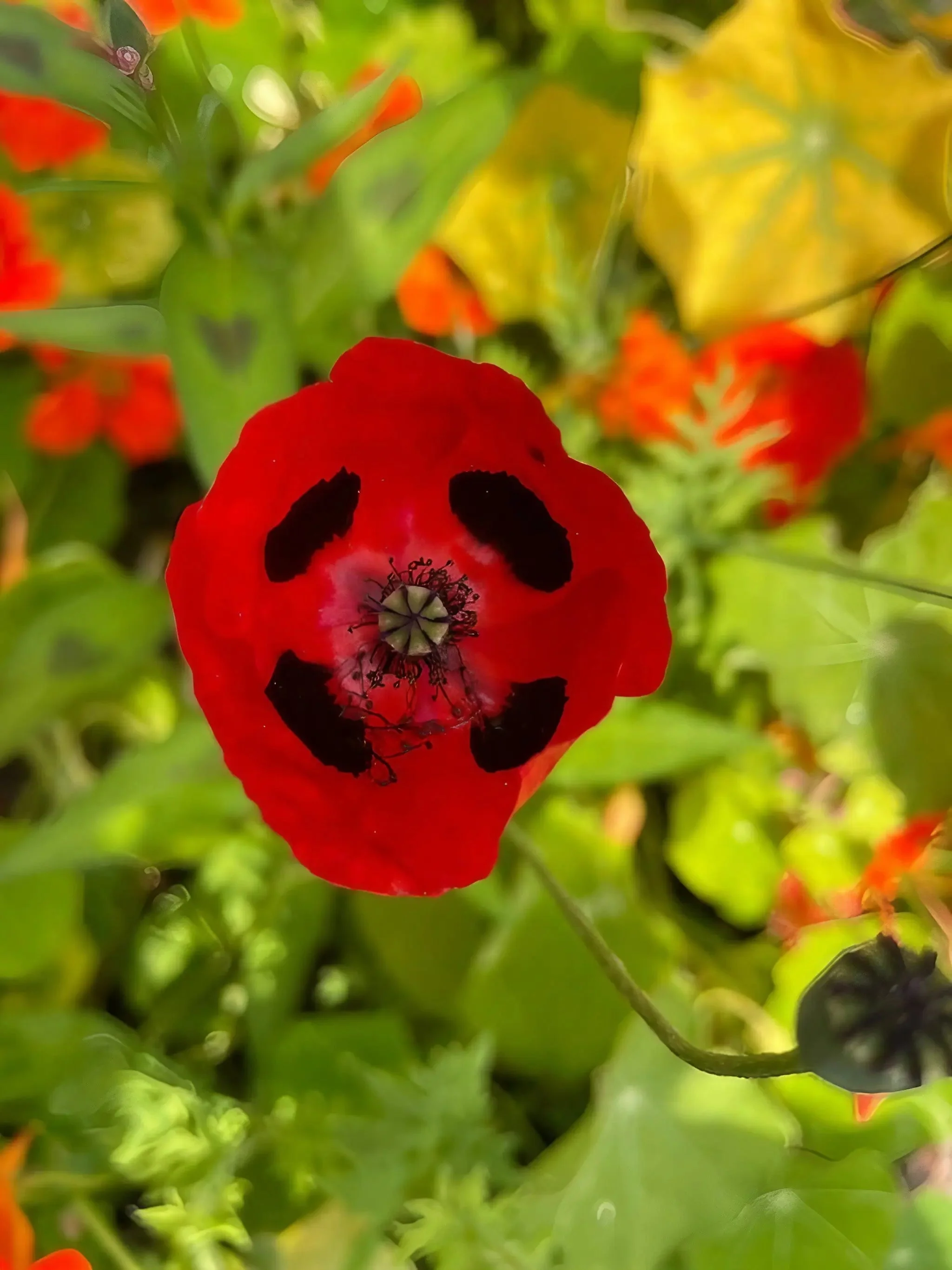
While the common field poppy is beautiful, the 'Ladybird' poppy (Papaver commutatum) takes the charm to a whole new level. It produces large, bowl-shaped flowers in a vivid, glistening scarlet-red. But the star feature is the set of four huge, jet-black blotches at the base of the petals, giving the flower its famous ladybird appearance.
Unlike the tall, spindly wild poppies, this variety forms a neat, bushy mound of foliage (about 45cm high) that becomes smothered in blooms from early summer. It is a spectacular "filler" plant, perfect for bridging gaps between perennials or creating a low ribbon of vibrant colour along the front of a sunny border.
Read More
🌿 Understanding the Plant
The Ladybird Poppy is a Hardy Annual.
It completes its life cycle in one season. It thrives on cool weather, making it perfect for the unpredictability of a British spring.
The Self-Seeder: This plant is a generous guest. If you leave the pepper-pot seed heads to dry on the plant in autumn, they will shake out their seeds in the wind, ensuring you have a fresh crop of ladybirds popping up next year for free.
Top Tip: Like all poppies, it has a long taproot and hates being transplanted. Do not sow in seed trays! Sow it directly where you want it to grow.
🌱 Growing Guide: How to Sow and Grow
Poppies are the easiest flowers to grow, provided you follow one rule: Don't bury them!
Germination:
Sow directly outdoors in Autumn (Sept-Oct) for early flowers next year, or Spring (March-May). Scatter the tiny seeds on the surface of raked, weed-free soil. Do not cover with soil—they need light to germinate. Just press them down gently. Germination takes 14-21 days.
Where to Sow:
They demand full sun and well-drained soil. They love sandy, chalky, or gritty ground.
Care While Growing:
Thinning is crucial: You will likely get hundreds of seedlings. You must thin them out to about 20-30cm apart. If you don't, the plants will be tiny, stressed, and finish flowering quickly. Give them space to bush out!
📋 Plant Specifications
| Latin Name | Papaver commutatum |
| Common Name | Poppy 'Ladybird' |
| Hardiness | H7 (Very Hardy Annual) |
| Light Required | Full Sun ☀️ |
| Height | ↕️ 40cm - 50cm (Bushy) |
| Spread | ↔️ 30cm |
| Spacing | 🌱 20cm - 30cm apart |
| Great for | 🐝 Pollinators 🧱 Front of Border 🏡 Cottage Gardens 🌾 Wild Patches |
| Seed Count | Approx. 700 seeds per packet |
🤝 Perfect Garden Companions
The intense red and black of 'Ladybird' looks stunning with contrasting blues and whites:
- 🔵 Cornflower 'Blue Ball': The Primary Mix. Red and Blue is a classic wildflower combination. The electric blue of the cornflower vibrates against the scarlet poppy, creating a high-energy display that bees can spot from miles away.
- ❄️ Ammi Majus (Queen Anne's Lace): The Softener. The bold, solid cups of the poppy look beautiful when nestled in the frothy, white lace of Ammi. It softens the look and adds height behind the lower-growing poppies.
📅 Sowing & Flowering Calendar
Sow directly outdoors in autumn or spring. Flowers mid-summer (June-August).
| Month | J | F | M | A | M | J | J | A | S | O | N | D |
|---|---|---|---|---|---|---|---|---|---|---|---|---|
| Sow Outdoors | 🟢 | 🟢 | 🟢 | 🟢 | 🟢 | |||||||
| Flowers | 🌸 | 🌸 | 🌸 | 🌸 |
🏆 Officially Recognised Excellence
'Ladybird' is a superior variety. It holds the prestigious RHS Award of Garden Merit (AGM) for its vigour, uniformity, and outstanding performance in British gardens.
Details & Craftsmanship
Every detail has been carefully considered to bring you the perfect product.

Details & Craftsmanship
Every detail has been carefully considered to bring you the perfect product.

Details & Craftsmanship
Every detail has been carefully considered to bring you the perfect product.

Details & Craftsmanship
Every detail has been carefully considered to bring you the perfect product.

Details & Craftsmanship
Every detail has been carefully considered to bring you the perfect product.

Details & Craftsmanship
Every detail has been carefully considered to bring you the perfect product.

Details & Craftsmanship
Every detail has been carefully considered to bring you the perfect product.

Details & Craftsmanship
Every detail has been carefully considered to bring you the perfect product.
Description
Poppy 'Ladybird' Seeds
While the common field poppy is beautiful, the 'Ladybird' poppy (Papaver commutatum) takes the charm to a whole new level. It produces large, bowl-shaped flowers in a vivid, glistening scarlet-red. But the star feature is the set of four huge, jet-black blotches at the base of the petals, giving the flower its famous ladybird appearance.
Unlike the tall, spindly wild poppies, this variety forms a neat, bushy mound of foliage (about 45cm high) that becomes smothered in blooms from early summer. It is a spectacular "filler" plant, perfect for bridging gaps between perennials or creating a low ribbon of vibrant colour along the front of a sunny border.
Read More
🌿 Understanding the Plant
The Ladybird Poppy is a Hardy Annual.
It completes its life cycle in one season. It thrives on cool weather, making it perfect for the unpredictability of a British spring.
The Self-Seeder: This plant is a generous guest. If you leave the pepper-pot seed heads to dry on the plant in autumn, they will shake out their seeds in the wind, ensuring you have a fresh crop of ladybirds popping up next year for free.
Top Tip: Like all poppies, it has a long taproot and hates being transplanted. Do not sow in seed trays! Sow it directly where you want it to grow.
🌱 Growing Guide: How to Sow and Grow
Poppies are the easiest flowers to grow, provided you follow one rule: Don't bury them!
Germination:
Sow directly outdoors in Autumn (Sept-Oct) for early flowers next year, or Spring (March-May). Scatter the tiny seeds on the surface of raked, weed-free soil. Do not cover with soil—they need light to germinate. Just press them down gently. Germination takes 14-21 days.
Where to Sow:
They demand full sun and well-drained soil. They love sandy, chalky, or gritty ground.
Care While Growing:
Thinning is crucial: You will likely get hundreds of seedlings. You must thin them out to about 20-30cm apart. If you don't, the plants will be tiny, stressed, and finish flowering quickly. Give them space to bush out!
📋 Plant Specifications
| Latin Name | Papaver commutatum |
| Common Name | Poppy 'Ladybird' |
| Hardiness | H7 (Very Hardy Annual) |
| Light Required | Full Sun ☀️ |
| Height | ↕️ 40cm - 50cm (Bushy) |
| Spread | ↔️ 30cm |
| Spacing | 🌱 20cm - 30cm apart |
| Great for | 🐝 Pollinators 🧱 Front of Border 🏡 Cottage Gardens 🌾 Wild Patches |
| Seed Count | Approx. 700 seeds per packet |
🤝 Perfect Garden Companions
The intense red and black of 'Ladybird' looks stunning with contrasting blues and whites:
- 🔵 Cornflower 'Blue Ball': The Primary Mix. Red and Blue is a classic wildflower combination. The electric blue of the cornflower vibrates against the scarlet poppy, creating a high-energy display that bees can spot from miles away.
- ❄️ Ammi Majus (Queen Anne's Lace): The Softener. The bold, solid cups of the poppy look beautiful when nestled in the frothy, white lace of Ammi. It softens the look and adds height behind the lower-growing poppies.
📅 Sowing & Flowering Calendar
Sow directly outdoors in autumn or spring. Flowers mid-summer (June-August).
| Month | J | F | M | A | M | J | J | A | S | O | N | D |
|---|---|---|---|---|---|---|---|---|---|---|---|---|
| Sow Outdoors | 🟢 | 🟢 | 🟢 | 🟢 | 🟢 | |||||||
| Flowers | 🌸 | 🌸 | 🌸 | 🌸 |
🏆 Officially Recognised Excellence
'Ladybird' is a superior variety. It holds the prestigious RHS Award of Garden Merit (AGM) for its vigour, uniformity, and outstanding performance in British gardens.